
Netflix has a cure for algorithm fatigue. His name is Nathan Shoop.
A man in a bathrobe, a whiteboard and a billboard may be more interesting than the movie he's selling.

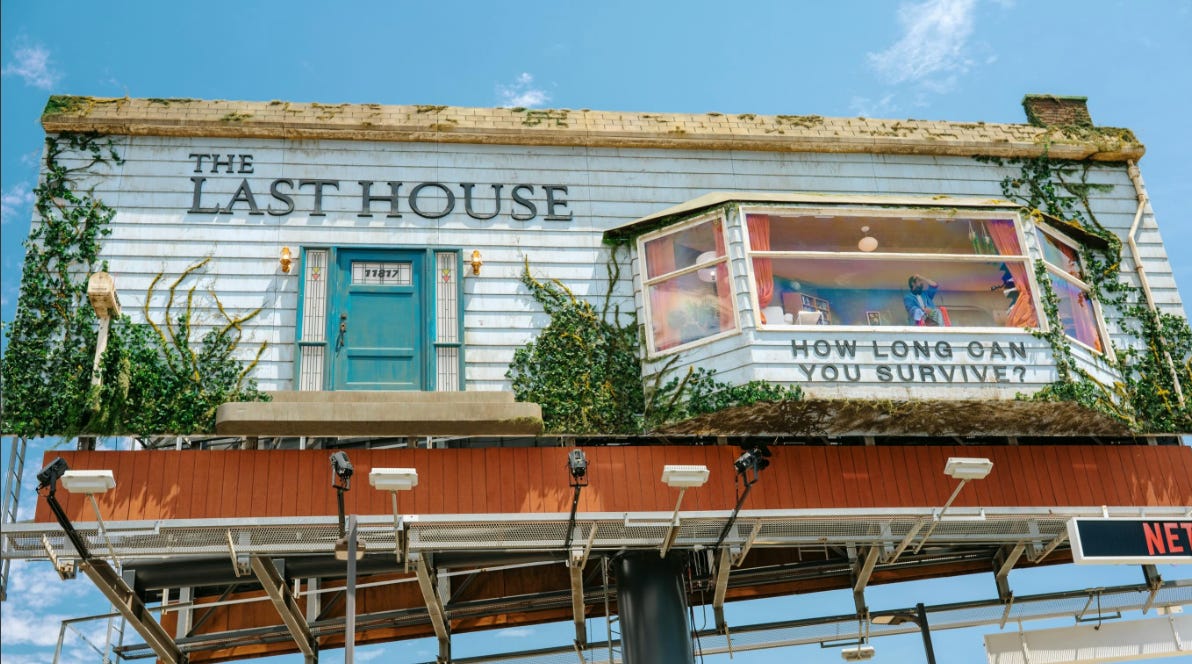
Actor Nathan Shoop had a fun three days.
He was living in a billboard thirty feet above the intersection of Sunset Boulevard and Selma Avenue. Just beneath his window was a sign that read “How Long Can You Survive?”
This stunt was launched to promote a new Netflix movie called The Last House, a horror film in which a family finds themselves sealed in their home. The movie came out August 7th, while Shoop was enjoying snacks in the billboard.
Shoop was living up there with no TV, no WiFi or phone. His only method of communication, beyond waving to people, was via whiteboard. Shoop seemed in high spirits playing his part and cracking jokes with a New York Times reporter.
While The New York Times framed this story as a gamble Netflix needed to take after a summer slump, this stunt provided much deeper takeaway that the streaming company inadvertently showed.
We are already trapped.
Netflix is one of the reasons millions of people sit at home, metaphorically trapped in their houses, glued to their screens, watching, or more precisely, scrolling.
As the Times article points out:
A report last month pointing out a decline in viewership numbers between the first and second seasons of popular shows has concerned investors. In its earnings call last month, Netflix also offered weaker-than-expected revenue guidance for the next quarter, and shares dropped some 8 percent on that news.
The Wall Street Journal called the time spent “watching content and how frequently they finish a movie or series…the holy grail in modern Hollywood.” And that’s the problem Netflix is trying to solve. As of July, shares of Netflix were down 40% over the past twelve months. Netflix was considering adding live TV channels as a way to compete with other streaming services.
It’s not that people are letting their subscriptions lapse; they’re only half-watching. They start things and abandon them, let something play in the background while they look at their phones. They spend time scrolling but not engaging.
The algorithm optimized the act of watching television, but not the desire.
Netflix is basically admitting the algorithm, which they relied on successfully for years is no longer working, hence the man in the billboard stunt. A company famous for data-driven distribution has realized the best way to market its film is through something offline.
It certainly got everyone’s attention; as a marketing stunt, it’s nearly perfect. The flaw is that the billboard might be more interesting than the movie. Instead of another dystopian movie, we’re more excited by a guy in a bathrobe in a billboard waving to us. It’s gimmicky, sure. But it’s strange in a good way, and more disruptive than watching the actual movie at home would be. We’re so used to passively consuming, or in Netflix’s case, half-consuming, that any interaction, especially offline, is refreshing.
An interesting focus group would have been to show the spectators who saw the billboard The Last House and then ask which one they enjoyed watching more.
The stunt is an inadvertent PSA to be more like Nathan Shoop
While a three-day gig doesn’t pay the same as a starring role in a Netflix movie, there is an irony that Shoop might be remembered more than The Last House for two reasons. The first is, he’s a likable character. There’s no way of knowing if he was playing an everyman, or just himself, but even the short clips in the New York Times article show a man who is charming, down-to-earth and very on-brand for Netflix, albeit with his tongue firmly in cheek. What’s not to love?
When asked by the reporter via whiteboard if he got bored, Shoop’s scrawled reply was “Only boring people get bored.” Acting or not, it’s an accidental admission that one can happily go through life without wifi, a permanent phone attached to your palm, or Netflix for that matter and still be completely content.
Imagine viewing L.A. from the vantage point of a billboard. Watching the world go by. The traffic snail trail, neon signs at night, absorbing the invisible energy of that famous neighborhood. People-watching with the help of his binoculars. Pedestrians on the sidewalk. Watching workers in buildings, maybe spying on peoples’ apartments. And all the while, oddly being more present from thirty feet above than being stuck in front of a screen.
If I had a pen and paper, I’d spend most of the time writing about what I witnessed like a distant reporter. It’s inevitable that something interesting would happen. A traffic accident. A potential celebrity sighting. One of Hollywood’s finest weirdos strolling by. Moments of unscripted humanity.
I wouldn’t be bored, either.
All the stunts in the world can’t make a bad movie good
The Last House premiered on August 7th, so it’s been less time than Nathan Shoop was in the billboard. But opening weekends determine a lot. With thirty-seven professional reviews on Rotten Tomatoes and over 500+ ratings from the audience to date, the results are dismal.
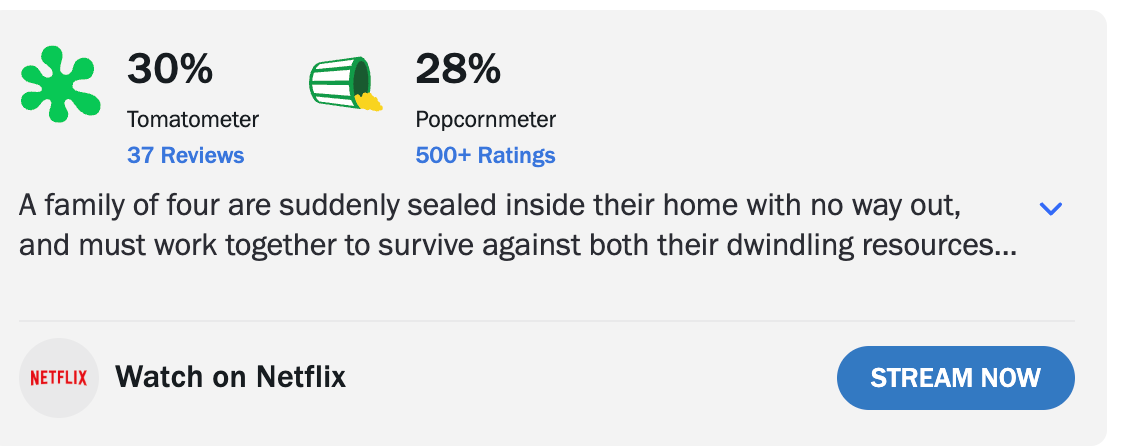
Elliott Collins of Movie Files said “Repetitive survival beats, underdeveloped characters, and an underwhelming payoff turn a great premise into another forgettable Netflix thriller.”
Writing for RogerEbert.com, Brian Tallerico called it “frustrating and forgettable.”
Audience reviews are more savage, with most calling out the writing as being juvenile. This one summed it up best.
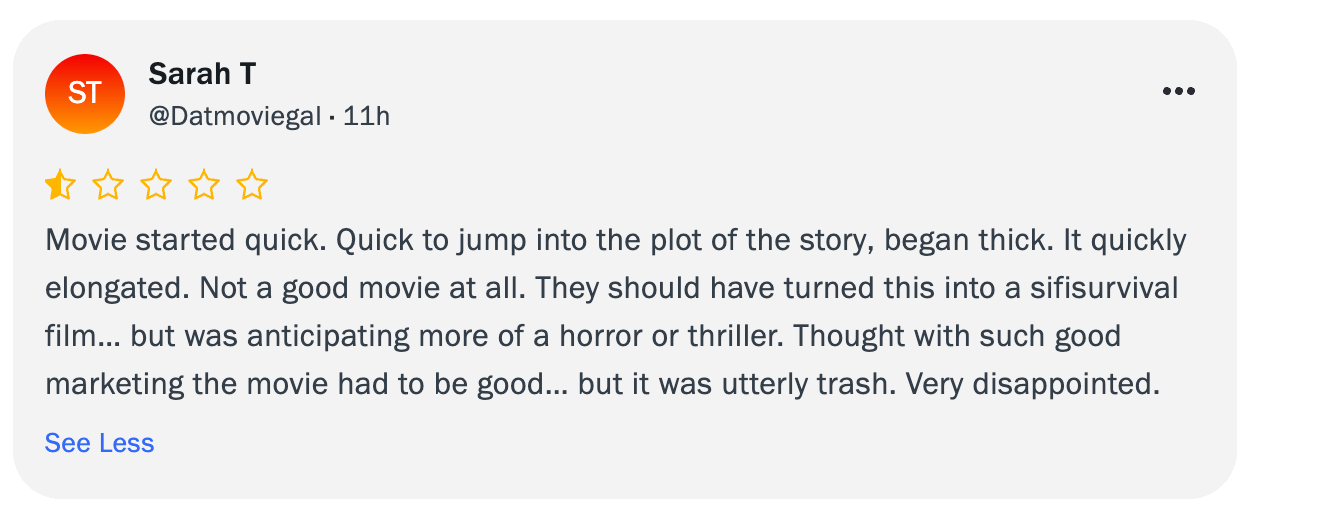
The oft-told adage remains: Nothing kills a bad product faster than good advertising.
But this review also points out something interesting. Because culture is so algorithm-dependent, everything has to happen immediately. The hook has to be in the first ten seconds of the song. The movie has to start quickly with no build-up or breathing room.
The algorithm didn’t just change how most people consume culture, but how culture gets made. If the responses to The Last House are anything to go by, it’s not necessarily for the better.
If you don’t like subscription models but would still like to support my work, you can always buy me a coffee.